简体中文
简体中文 English
 Español
Submit feedback
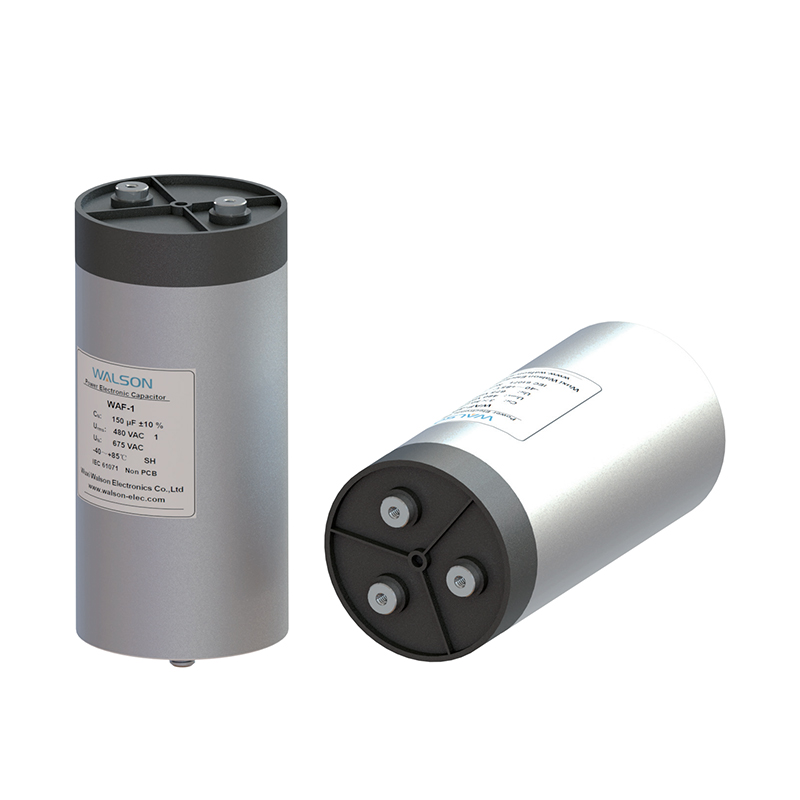
AC Film Capacitor Maintenance Tips to Extend Lifespan
As global power-electronics applications accelerate toward higher efficiency, reliability, and long service cycles, passive components such as the AC film capacitor have become vital in grid-connected converters, power conditioning systems, industrial drives, and household appliances. Although film capacitors are inherently robust—thanks to their self-healing dielectric layers and low dielectric loss—many still experience premature aging, capacity drift, or thermal-mechanical deformation when used in demanding AC environments.
Overview of AC Film Capacitor Reliability Challenges
The AC film capacitor operates under alternating electrical fields, where voltage polarity continuously reverses across metallized film layers. This dynamic stress creates unique challenges: thermal cycling, dielectric stress accumulation, moisture ingress, and metallization erosion. Technicians and system designers often underestimate how these variables interact over years of continuous operation.
The following factors typically influence long-term reliability:
Thermal Stress
Heat is one of the primary drivers of film degradation. Even modest temperature elevation accelerates polymer chain breakdown, increases leakage current, and weakens metallized layers. AC capacitors in inverter or rectifier circuits experience localized hotspots, especially near winding edges.
Voltage Stress and Overcurrent
Voltage spikes, harmonics, resonance events, and switching transients can impose short-duration but high-magnitude stress on the dielectric. This may partial discharge within micro-voids, gradually reducing dielectric integrity.
Humidity and Environmental Contamination
Moisture absorption alters the dielectric constant of polymer films and accelerates electrode corrosion. Dust, corrosive gases, and industrial chemical vapors further attack metallized surfaces, even when capacitors are sealed.
Frequency and Ripple Current
High-frequency AC operation produces additional heat through dielectric dissipation. Ripple current, especially when pulse-shaped or non-sinusoidal, contributes to internal temperature rise.
Mechanical Stress
Vibration from motors, compressors, or external shock can fatigue capacitor terminals and internal winding structures.
Understanding these foundational failure mechanisms is essential before developing an effective maintenance strategy.
Routine Inspection Practices to Protect AC Film Capacitors
Establishing structured inspection routines significantly reduces the risk of unplanned downtime. Effective maintenance does not always require complex instrumentation; it begins with consistent process discipline.
Visual Inspection
A periodic visual check should identify:
- Swelling or bulging of the outer case
- Oil leakage in encapsulated types
- Discoloration around terminals
- Cracks in resin or plastic housings
- Burn marks indicating overheating or arcing
- Loose mounting brackets or terminal screws
Visual anomalies often signal deeper electrical or thermal issues.
Electrical Parameter Monitoring
Key parameters to measure include:
- Capacitance
- Dissipation factor (DF) or tan δ
- Equivalent series resistance (ESR)
- Insulation resistance
- Leakage current
- Voltage stability
Below is a reference table summarizing recommended inspection intervals:
Recommended Inspection Cycle for AC Film Capacitors
| Parameter | Suggested Interval | Notes |
|---|---|---|
| Capacitance | Every 6–12 months | Look for drift beyond ±5–10% |
| Dissipation factor | Annually | Increase indicates dielectric aging |
| ESR | Every 6–12 months | Important for high-frequency applications |
| Insulation resistance | Annually | Decline may signal moisture infiltration |
| Terminal torque check | Every 12 months | Essential for vibration-prone environments |
| Thermal imaging | Every 6 months | Detects early hot-spot development |
Temperature Monitoring
Real-time thermal tracking is beneficial in:
- Inverters
- Renewable-energy controllers
- High-frequency power modules
- Motor-drive applications
If the capacitor body consistently exceeds its rated temperature, accelerated aging becomes inevitable. Thermal imaging can reveal hidden behavior, such as internal winding hotspots or poor heat dissipation pathways.
Thermal Management Strategies
Thermal stress is responsible for a significant percentage of AC film capacitor failures. Proper thermal design is a critical maintenance activity and should be revisited throughout the system’s operational life.
Adequate Ventilation and Airflow
Ensure:
- Unobstructed airflow around capacitor terminals
- Clearance space in dense power modules
- Positioning away from heat-generating components such as IGBTs or transformers
Forced convection or optimized duct geometry can drastically reduce thermal gradients.
Heat Sink Integration
Some AC film capacitor forms permit conduction-based heat transfer through metal housings. Mounting them on dedicated cooling plates ensures long-term temperature stability in continuous-duty applications.
Avoiding Thermal Shock
Rapid temperature swings degrade polymer alignment. Systems exposed to outdoor conditions or intermittent operation should minimize abrupt thermal transitions whenever possible.
Ripple Current Control
Maintaining ripple current at or below rated limits is critical. Excess ripple increases internal heating even when ambient temperature is low. Proper filtering, inductive smoothing, and harmonic suppression help control ripple amplitude.
Electrical Stress Reduction
Electrical stress plays a major role in capacitor longevity. Maintenance teams should assess circuit behavior thoroughly.
Surge Protection
Transient voltages from switching events, lightning, or grid instability can exceed the capacitor’s dielectric threshold. Employ:
- Surge arresters
- Transient voltage suppressors
- Proper shielding of high-frequency switching pathways
Balancing Circuits for Series-Connected Capacitors
When multiple AC film capacitor units are connected in series, maintenance must ensure voltage sharing remains balanced. Drift in capacitor values causes unequal voltage distribution, accelerating failure.
Managing Harmonics
Systems with rectifiers or variable-speed drives generate distorted waveforms. Harmonic filters reduce dielectric heating and prolong capacitor life.
Avoiding Overvoltage and Overcurrent
Even slight overvoltage, when continuous, reduces dielectric endurance. Regular recalibration of control circuits stabilizes operating conditions.
Environmental Protection Measures
Environmental contaminants accelerate deterioration regardless of electrical conditions. A rigorous environmental control strategy extends service life.
Moisture Control
Humidity is one of the main contributors to insulation failure. Recommended practices include:
- Ensuring enclosures maintain proper IP ratings
- Adding desiccants in sealed cabinets
- Using climate-controlled enclosures for outdoor installations
Dust and Particulate Control
Dust buildup increases surface leakage current and promotes tracking. Air filters and periodic cabinet cleaning are crucial.
Vibration Management
Vibration-induced fatigue affects terminal welds, mountings, and internal film layers. Anti-vibration mounts and rigid mechanical bracing reduce mechanical stress.
Preventive Maintenance Planning
A systematic preventive maintenance schedule ensures consistent capacitor performance across large installations.
Maintenance Checklist
A thorough checklist may include:
- Capacitance verification
- Thermal inspection
- Voltage distribution analysis
- Terminal torque tightening
- Cabinet environmental measurements
- Harmonic distortion monitoring
Predictive Analytics and Condition Monitoring
Advanced systems use:
- Online ESR measurement
- Harmonic signature trend analysis
- Machine learning models for failure likelihood
- Embedded sensors for temperature and moisture
Predictive tools help convert reactive maintenance into proactive asset management.
Storage and Handling Guidelines
Improper storage can damage capacitors before they ever enter service.
Storage Conditions
Follow these guidelines:
- Maintain a stable ambient temperature
- Avoid exposure to direct sunlight
- Control humidity within recommended limits
- Store away from corrosive chemicals
Handling Precautions
Film capacitors may retain charge long after power-down. Always discharge capacitors safely before transport or inspection.
System-Level Design Considerations for Longevity
Good system-level engineering practices reduce maintenance requirements.
Derating Strategy
A well-implemented derating plan enhances service life. Derating includes:
- Operating below rated voltage
- Maintaining extra margin for ripple current
- Selecting higher capacitance values to reduce stress
Heat Path Optimization
Thermal paths must be evaluated through simulation or thermal imaging. Heat-spreading layers, gasket materials, and optimized mounting positions contribute significantly to lifespan.
Circuit Layout Optimizations
A clean, compact layout reduces parasitic inductance, minimizes voltage spikes, and enhances capacitor stability.
Failure Modes and Diagnostic Indicators
Understanding failure signatures enables quicker troubleshooting.
Dielectric Breakdown
Symptoms include sudden capacitance collapse, leakage surge, or intermittent short-circuit behavior.
Electrode Erosion
Slow capacitance loss often points to metallization erosion caused by continuous overvoltage.
Thermal Deformation
Bulging, odor, discoloration, or cracked casing indicate overheating.
Mechanical Failure
Loose terminals or fractured mounting points reflect vibration fatigue.
Maintenance Optimization Through Data Logging
Long-term data visibility enhances decision-making.
Data Points to Record
- Ambient temperature
- Load current profile
- Harmonic content
- Voltage fluctuations
- ESR trends
- Capacitance stability
Ensuring Long-Term Reliability in Critical Applications
AC film capacitors used in mission-critical environments—such as energy storage, medical power systems, industrial automation, and transportation—require disciplined maintenance protocols. Their role as energy buffers, harmonic filters, and AC stability components makes reliability essential.
Practices that significantly extend life include:
- Maintaining strict temperature boundaries
- Using robust derating margins
- Avoiding continuous high-frequency stress
- Deploying environmental sealing solutions
- Conducting predictive maintenance analysis
These combined strategies prevent unplanned shutdowns, optimize lifecycle cost, and sustain consistent electrical performance.
FAQ
1. What is the important factor affecting the lifespan of an AC film capacitor?
Temperature is the dominant factor. Elevated operating temperatures accelerate dielectric aging more than any other stress element.
2. How often should capacitance be measured during routine maintenance?
A 6- to 12-month interval is generally sufficient for AC applications, depending on load and environmental conditions.
3. Does moisture really impact film capacitor performance?
Yes. Moisture reduces insulation resistance and causes metallization corrosion, thus accelerating material degradation.
4. Can overvoltage events cause immediate failure?
Yes. Severe voltage spikes may trigger dielectric breakdown. Even moderate overvoltage, when sustained, shortens service life.
5. Is derating necessary for AC film capacitors?
Derating is highly recommended. Operating below voltage and ripple ratings significantly increases long-term reliability.