简体中文
简体中文 English
 Español
Submit feedback
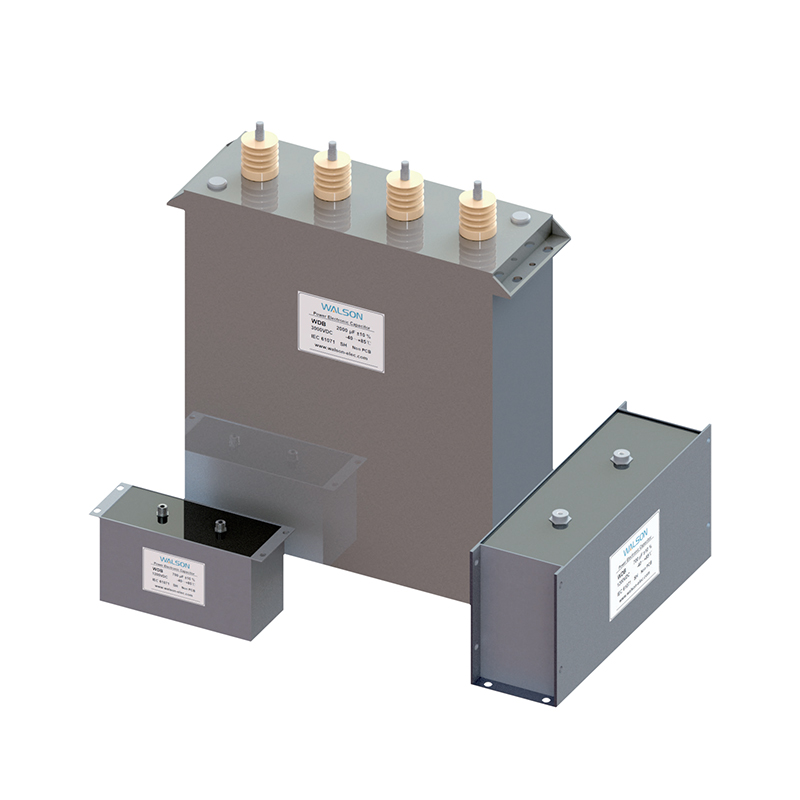
What Is a DC-link Film Capacitor and Why It Matters in Modern Power Electronics?
In the rapidly evolving field of power electronics, the demand for higher efficiency, improved reliability, and greater power density has pushed engineers to rethink how energy is stored, filtered, and delivered within power conversion systems. Among the many passive components that determine the stability and performance of these systems, the DC-link film capacitor has emerged as a cornerstone technology. Although often small in size compared to active devices such as semiconductor switches, this capacitor type plays a disproportionately large role in ensuring that systems such as electric vehicle traction inverters, solar PV inverters, industrial motor drives, and energy storage converters operate safely, efficiently, and with minimal electrical stress.
Understanding the Role of the DC Link in Power Electronics
To appreciate the importance of a DC-link film capacitor, it is necessary to understand the function of the DC link within a power conversion system. In many modern designs—especially those using AC–DC or DC–AC stages—the DC link is the intermediate bus that stores electrical energy and stabilizes voltage between the input and output conversion processes.
A typical example involves a two-stage power converter:
An AC–DC rectification stage, which converts AC power into DC.
A DC–AC or DC–DC converter, which adjusts the voltage, current, or frequency for the output application.
Between these two stages lies the DC bus, and across this bus sits the DC-link capacitor, responsible for:
- Reducing voltage ripple
- Absorbing high-frequency switching noise
- Providing instantaneous current for fast load changes
- Protecting semiconductor switching devices
- Maintaining overall system stability
Because modern systems use fast-switching devices such as IGBTs, SiC MOSFETs, and GaN HEMTs, the DC-link capacitor must withstand high dv/dt, high ripple currents, and high operating temperatures. This is why the DC-link film capacitor has quickly become the preferred choice over other capacitor types.
What Is a DC-link Film Capacitor?
A DC-link film capacitor is a metallized polypropylene or polyester film capacitor specifically designed to operate in high-voltage DC bus environments. Unlike electrolytic capacitors, which rely on an electrolyte that can dry out over time, film capacitors use a thin plastic film as the dielectric, offering thermal stability, insulation strength, and self-healing properties.
Key Structural Features
-
Metallized Film Dielectric
The film is coated with a metal layer, providing high insulation and low dielectric loss. -
Self-healing Mechanism
When localized dielectric breakdown occurs, the evaporated metal isolates the fault zone, preventing catastrophic failure. -
Low ESR (Equivalent Series Resistance)
Minimizes heat generation and improves ripple current handling. -
Low ESL (Equivalent Series Inductance)
Enhances performance in high-frequency switching circuits.
Because of these characteristics, DC-link film capacitors are well suited to demanding applications with continuous ripple loads, fast transient responses, and the need for long operational lifetimes.
Why Film Capacitors Are Dominating DC-link Applications
Although electrolytic capacitors were once widely used for DC-link designs, industry demands have shifted dramatically. Miniaturization, higher efficiency, and increased power density have made film capacitors the preferred solution.
Superior Electrical Performance
DC-link film capacitors offer lower ESR than electrolytic capacitors, enabling them to handle higher ripple currents with less heat. Their frequency response also allows more effective suppression of switching harmonics, making them a natural fit for converters using high-speed wide-bandgap semiconductors such as SiC and GaN.
Exceptional Longevity
A defining feature of film capacitors is their long service life. With no liquid electrolyte, they do not suffer from evaporation or chemical degradation. Their self-healing ability extends lifetime even under electrical stress, making them ideal for applications requiring 10–20 years of reliable operation.
Improved Thermal Stability
Film capacitors maintain stable capacitance and insulation strength over a wide temperature range, supporting continuous operation in harsh industrial or automotive environments.
Failure Safety
When a fault occurs, self-healing prevents short circuits, reducing the risk of system downtime, fire, or component damage. This reliability is critical in safety-sensitive sectors such as electric vehicles, wind power, and aerospace power units.
Technical Parameters That Define a High-Quality DC-link Film Capacitor
When designing or selecting a DC-link film capacitor, engineers typically evaluate several core parameters. The following table summarizes the important characteristics.
Key Technical Parameters of a DC-link Film Capacitor
| Parameter | Description | Impact on System Performance |
|---|---|---|
| Capacitance | Energy storage capability of the capacitor | Determines DC-bus stability and ripple suppression |
| Rated Voltage | Maximum continuous voltage | Ensures safety in high-voltage DC bus circuits |
| ESR (Equivalent Series Resistance) | Resistive loss of the capacitor | Influences heating and ripple current handling |
| ESL (Equivalent Series Inductance) | Inductive component of the capacitor | Affects high-frequency performance in switching circuits |
| Ripple Current Rating | Maximum current the capacitor can tolerate | Directly impacts thermal stability and system reliability |
| Self-healing Capability | Ability to isolate dielectric faults | Enhances long-term reliability |
| Temperature Range | Allowable operating temperatures | Determines suitability for high-power or automotive environments |
| Lifetime Expectancy | Operational life under rated conditions | Predicts system durability and maintenance needs |
Applications Where DC-link Film Capacitors Are Essential
The versatility and reliability of DC-link film capacitors allow them to be integrated across a wide array of modern power conversion applications.
Renewable Energy Inverters
Solar and wind power systems rely heavily on stable DC-link performance. The capacitor smooths the rectified DC output and supports rapid energy fluctuations caused by changing environmental conditions. High-traffic keywords such as solar inverter, renewable energy converter, and grid-tied inverter naturally align with the role of DC-link film capacitors in this sector.
Electric Vehicle Traction Inverters
In EV powertrains, DC-link film capacitors are placed between the battery pack and the traction inverter. Their ability to handle high ripple currents and resist vibration ensures stable acceleration, regenerative braking, and thermal management. The component’s longevity contributes significantly to the lifespan of the EV drivetrain.
Motor Drives and Industrial Automation
Modern motors use advanced variable-speed drives, requiring rapid switching and precise current control. DC-link film capacitors regulate DC bus voltage, reduce electromagnetic interference, and protect switching devices during heavy loads.
Energy Storage Systems
Battery energy storage systems (BESS) use DC-link capacitors to maintain stable DC bus operation, enabling efficient charge and discharge cycles. Their high reliability supports long-term grid-level energy balancing.
High-power DC–DC Converters
DC–DC converters found in telecom rectifiers, data center UPS systems, and aerospace applications require stable intermediate DC bus performance. Film capacitors meet the high-frequency, high-efficiency demand of these fast-switching systems.
Engineering Considerations When Designing a DC-link Stage
Selecting the appropriate DC-link film capacitor requires a careful balance of electrical performance, physical size, and expected lifetime.
Voltage Selection
It is recommended to choose a capacitor with a voltage rating at least 20–30% above the expected DC bus voltage. This ensures proper derating in stressful conditions such as transient overvoltage spikes.
Ripple Current Capability
Ripple current is one of the primary stress factors for DC-link capacitors. A capacitor with insufficient ripple current rating will overheat and degrade prematurely. Engineers often evaluate:
- Ambient temperature
- Cooling method
- Operating frequency
- Harmonic content
to ensure the selected capacitor can handle the thermal load.
ESR and Thermal Performance
Low ESR minimizes heating losses, improving both energy efficiency and component lifetime. This is especially crucial in systems using silicon carbide and gallium nitride converters, where switching frequencies are significantly higher.
Mechanical Stability
In mobile or vibration-prone applications—such as traction inverters—capacitors must withstand mechanical shock. A robust enclosure and stable internal construction prevent electrode movement and ensure reliable performance.
Lifetime Modeling
Engineers often use lifetime models based on:
- Hot-spot temperature
- Operating voltage
- Ripple current
- Thermal cycling
The predictable aging behavior of film capacitors makes them suitable for systems requiring long maintenance cycles.
Emerging Trends Driving Demand for DC-link Film Capacitors
Advancements in semiconductor technology, electrification, and clean energy are creating new performance requirements for DC-link components.
Wide-bandgap Semiconductor Adoption
Power electronics increasingly rely on SiC and GaN devices, which switch faster and operate at higher temperatures than traditional silicon components. DC-link film capacitors are uniquely capable of handling the resulting high-frequency stresses.
Higher Power Density Systems
To reduce system size and weight, converters are designed with:
- Higher switching frequencies
- Optimized thermal layouts
- Compact PCB designs
DC-link film capacitors with lower ESL and ESR are essential to supporting these new compact architectures.
Electrification of Transportation
Beyond passenger EVs, electrification is expanding into:
- Electric buses
- Electric trucks
- Hybrid powertrains
- Railway traction systems
- Marine propulsion
Each requires robust DC bus stabilization provided by DC-link film capacitors.
Grid Modernization and Decentralized Energy
As microgrids, energy storage systems, and distributed generation become more widespread, demand grows for high-reliability components that support stable power conversion.
Benefits of Using DC-link Film Capacitors in Modern Designs
Summarizing the advantages, DC-link film capacitors provide:
Excellent stability and low dielectric loss
High ripple current capability
Wide operating temperature range
Self-healing for enhanced safety
Long operational lifetime
Superior high-frequency performance
Reduced risk of catastrophic failure
Compatibility with wide-bandgap semiconductor systems
These benefits make them fundamental components for high-performance, long-life power converters.
FAQ
1. What is the primary function of a DC-link film capacitor?
Its main role is to stabilize the DC bus by reducing voltage ripple, absorbing switching noise, and supplying instantaneous current during load variations in power electronic systems.
2. Why are film capacitors preferred over electrolytic capacitors for DC-link applications?
Film capacitors offer lower ESR, longer lifetime, better thermal stability, and self-healing capabilities, making them more reliable in high-frequency, high-power environments.
3. Can a DC-link film capacitor operate with wide-bandgap semiconductors?
Yes. Their low inductance and resistance make them ideal for SiC and GaN-based converters that require high-frequency switching robustness.
4. Where are DC-link film capacitors commonly used?
They are widely used in EV inverters, renewable energy inverters, motor drives, high-voltage DC–DC converters, and industrial automation equipment.