简体中文
简体中文 English
 Español
Submit feedback
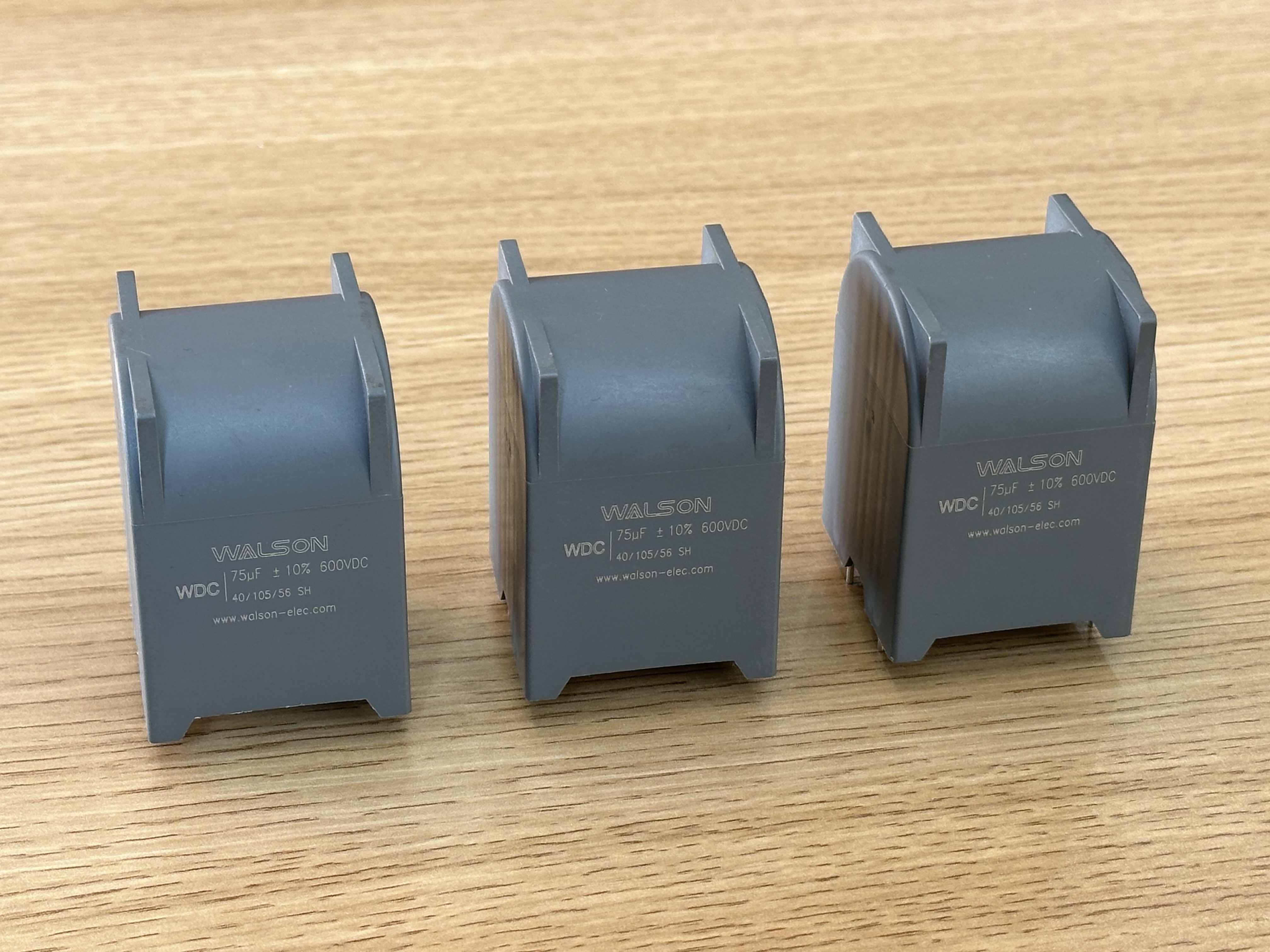
Interpretation of ESR/ESL Parameters of Film Capacitors and Their Important Impact on Equipment Operation
In electronic circuits, film capacitors are widely used due to their stability. To deeply understand their performance, two key parameters cannot be ignored: Equivalent Series Resistance (ESR) and Equivalent Series Inductance (ESL).
ESR (Equivalent Series Resistance) refers to the series resistance exhibited by the capacitor during operation. It is not an independent physical resistor but is composed of losses from the electrode resistance, contact resistance, and dielectric. The presence of ESR leads to two main issues: heat generation and reduced efficiency. When ripple current flows through the capacitor, power is dissipated across the ESR (P = I² * ESR). This energy is converted into heat, raising the internal temperature of the capacitor. According to the Arrhenius theory, for every 10°C rise in temperature, the lifespan of the capacitor is often halved. Therefore, low ESR is crucial for ensuring long life and high operating efficiency.
ESL (Equivalent Series Inductance) stems from the parasitic inductance formed by the capacitor leads and the internal electrode structure. In low-frequency applications, the effect of ESL is negligible. However, in high-frequency switching circuits (such as switching power supplies and inverters), ESL resonates with the capacitor, creating inductive reactance (XL = 2πfL). This causes the capacitor to lose its original filtering characteristics at high frequencies and may even induce oscillations or voltage spikes in the circuit, interfering with normal equipment operation.
Important Impact on Equipment Operation:
For high-power-density equipment like new energy vehicle drives and photovoltaic inverters, the rate of current change (di/dt) is extremely high. If the ESR of the film capacitor is too high, the risk of thermal runaway increases significantly. If the ESL is too high, it cannot effectively absorb the overvoltage generated during switching transients, potentially damaging power semiconductor devices (such as IGBTs). Therefore, selecting film capacitors with low ESR and low ESL is of vital importance for improving equipment energy efficiency, reliability, and Electromagnetic Compatibility (EMC).