简体中文
简体中文 English
 Español
Submit feedback
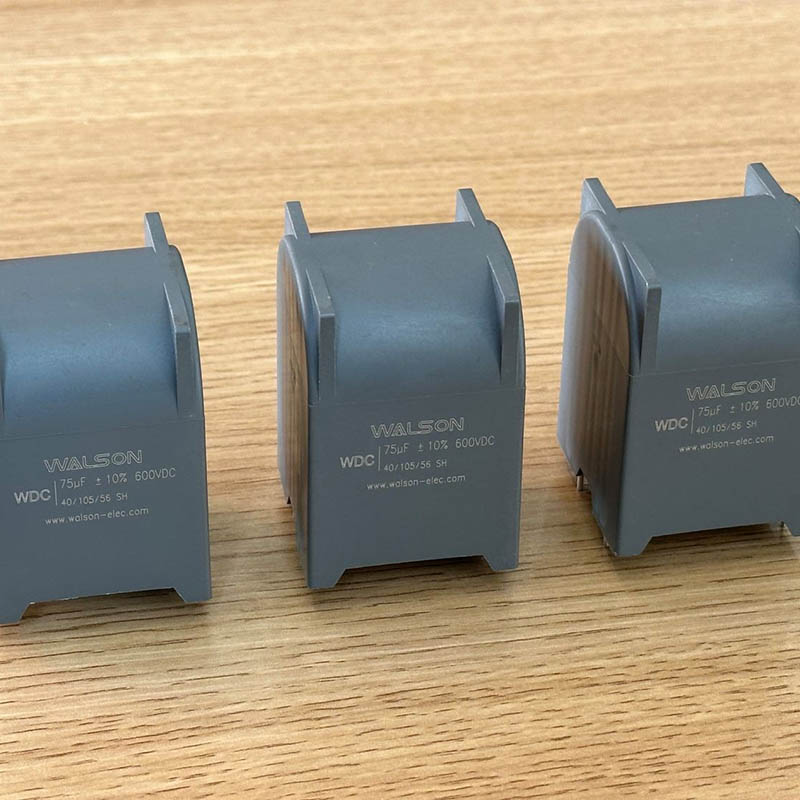
Theoretical Analysis and Solutions for Losses in Metallized Film Capacitors
Recent progress has been made in addressing the loss issues of metallized film capacitors under high-voltage and high-frequency applications. As key components in power electronics, renewable energy systems, and industrial drives, the loss characteristics of these capacitors directly affect system efficiency and operational lifespan. A research team has conducted an in-depth theoretical analysis of loss mechanisms and proposed a systematic set of solutions.
Theoretical analysis indicates that losses in metallized film capacitors mainly originate from three sources: dielectric loss, resistive loss from the metallized electrode, and contact resistance loss. Dielectric loss stems from the polarization lag of dielectrics such as polypropylene film under an alternating electric field, and is closely related to frequency, temperature, and material purity. While the metallized layer enables self-healing, its thin structure increases series resistance, to significant joule heating under high-frequency ripple currents. Poor contact at the interface between terminals and the sprayed metal layer also adds extra losses.
Based on these mechanisms, the team proposed multi-dimensional solutions to reduce losses: First, optimize the base film process using high-purity polypropylene to lower dielectric loss. Second, precisely control the sheet resistance of the metallized layer and adopt edge-thickening designs to reduce electrode resistance while maintaining self-healing performance. Third, improve end-spraying and welding techniques to minimize contact resistance. Additionally, thermal simulation can help optimize the internal structure to control hot-spot temperatures.