简体中文
简体中文 English
 Español
Submit feedback
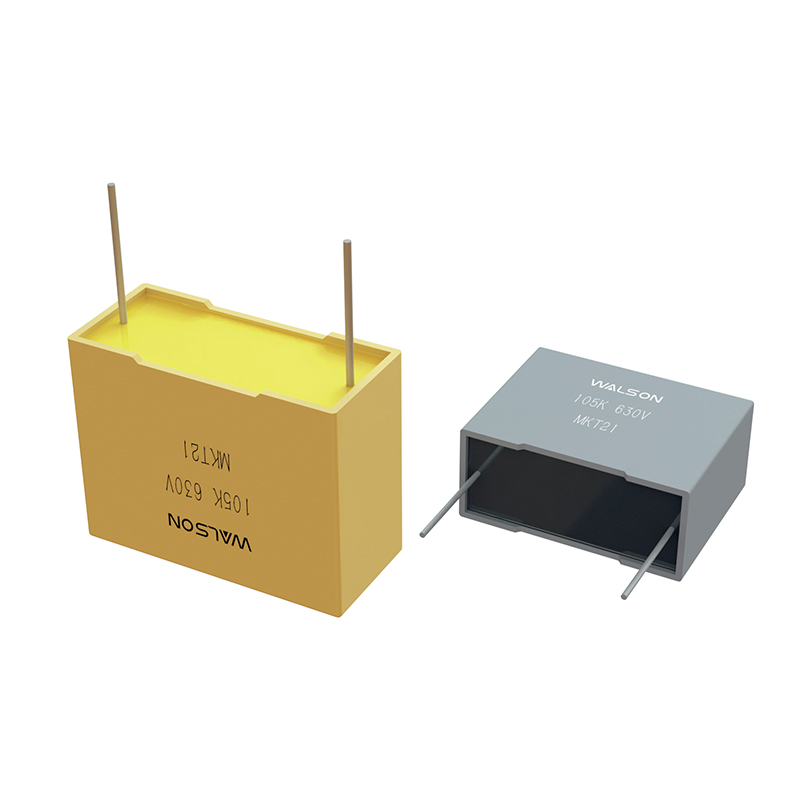
How Does Polyester Film Structure Influence Capacitor Performance?
Polyester film has long been recognized as one of the versatile dielectric materials for film capacitors, particularly in general-purpose electronic circuits, automotive modules, power systems, and consumer electronics. As the demand for compact, stable, and cost-efficient components continues to rise, understanding how polyester film structure shapes the behavior and limitations of polyester capacitors becomes increasingly important for engineers, designers, and polyester capacitor suppliers.
Across the electronics sector, material science is experiencing rapid evolution, pushing components to achieve higher reliability in harsh environments, tighter tolerances, and more precise electrical performance. Polyester film, traditionally valued for mechanical robustness and affordability, now plays a central role in bridging the gap between performance and cost efficiency.
Understanding Polyester Film as a Dielectric Material
Polyester film, typically consisting of polyethylene terephthalate (PET), is widely used as a dielectric due to its combination of physical, electrical, and environmental characteristics. Its molecular structure—formed by long polymer chains linked by ester groups—directly influences properties such as dielectric strength, insulation resistance, thermal stability, and moisture resistance.
Molecular Structure and Dielectric Function
Polyester film’s dielectric behavior arises from the alignment and orientation of polymer chains during the stretching and heat-setting processes. The film can exhibit varying degrees of crystallinity, which affects its ability to polarize under an electric field.
Key structural attributes include:
- Chain orientation: Impacts dielectric constant, breakdown strength, and stability.
- Crystallinity level: Affects thermal resistance, dimensional stability, and mechanical rigidity.
- Polymer purity: Determines moisture absorption and long-term insulation performance.
- Thickness uniformity: Influences voltage ratings and consistency across product batches.
These structural characteristics govern how well the polyester capacitor can store energy, resist electrical stresses, and maintain stable performance across temperature and humidity variations.
Why Polyester Film Is Widely Used
Polyester film remains dominant in many capacitor applications for several reasons:
High dielectric strength relative to thickness.
Mechanical durability under vibration, tension, and external stress.
Excellent insulation resistance even in compact configurations.
Good thermal tolerance for general to moderate temperature applications.
Cost-efficiency, making it ideal for mass-manufactured devices.
These attributes allow polyester capacitors to be produced in small sizes with moderate capacitance values, appealing to consumer electronics, industrial controls, lighting systems, and a range of power-related applications.
Structural Variations in Polyester Film and Their Impact on Capacitor Behavior
The structure of polyester film is not uniform across all products. Variations in processing, thickness, crystallinity, and surface treatments all play significant roles in determining how the capacitor behaves electrically and mechanically.
Film Thickness and Dielectric Strength
The dielectric strength of polyester film is closely tied to its thickness. Thinner films allow the construction of capacitors with higher capacitance per unit volume but may exhibit lower breakdown voltages.
A general relationship exists:
Thinner films → higher capacitance density but lower voltage rating
Thicker films → higher voltage rating but lower capacitance density
Polyester capacitor suppliers often provide multiple thickness grades tailored for specific applications, enabling designers to optimize for either capacitance or voltage endurance.
Crystallinity and Thermal Stability
Crystallinity affects how polyester handles thermal stress and dielectric loss:
- Higher crystallinity improves thermal resistance, dimensional stability, and mechanical strength.
- Lower crystallinity increases flexibility but may reduce temperature tolerance.
Capacitors operating in elevated temperatures, such as in automotive interior modules or industrial machinery, often require polyester films with enhanced crystallinity to ensure stability over long duty cycles.
Surface Treatment and Metallization Compatibility
Polyester film is commonly used in metallized capacitor constructions, where thin metal layers are deposited onto the film surface. Surface treatment greatly influences adhesion and metallization integrity.
Common treatments include:
- Electrical discharge surface activation
- Corona treatment
- Plasma treatment
These processes increase surface energy, improving metal adhesion and reducing the risk of delamination under electrical stress.
Biaxial Orientation and Mechanical Performance
During film production, polyester is stretched in both machine and transverse directions. This biaxial orientation shapes mechanical properties that directly affect capacitor resilience.
Benefits of biaxial orientation include:
- Enhanced tensile strength
- Reduced thickness variation
- Improved puncture resistance
- Better dimensional stability under load
These mechanical improvements translate into capacitors that withstand winding tension, vibration, and thermal cycling without structural fatigue.
How Film Structure Influences Key Performance Metrics
The performance of polyester capacitors depends on how the film behaves under electrical, thermal, and environmental conditions. Below are the primary performance attributes governed by film structure.
Capacitance Stability
The dielectric constant of polyester is moderately high but can fluctuate with temperature and frequency. Structural uniformity and purity help stabilize capacitance over broad operating ranges.
Influencing factors include:
- Polymer orientation
- Crystallinity
- Moisture absorption
- Impurities or micro-defects
Well-engineered polyester film minimizes variations, making polyester capacitors reliable for filtering, coupling, timing, and decoupling applications.
Insulation Resistance and Leakage Current
Moisture absorption is one of the critical concerns for polyester capacitors. Film structure determines how susceptible the dielectric is to water vapor penetration, which can increase leakage current.
Dense, uniform polymer structures reduce pathways for moisture diffusion, enhancing long-term insulation resistance.
Dielectric Losses at Various Frequencies
Polyester capacitors are widely used in AC circuits and audio applications due to their moderate dielectric losses. Film structure affects dissipation factor (DF), especially at higher frequencies.
Higher crystallinity and uniform density usually mean:
- Lower dielectric losses
- Reduced energy dissipation
- Improved high-frequency stability
Breakdown Voltage and Voltage Endurance
Voltage endurance depends on both film thickness and structural integrity. Imperfections such as micro-voids, inconsistent thickness, or metallization defects can reduce breakdown strength.
High-quality polyester films undergo:
- Optical inspection
- Electronic pinhole detection
- Corona resistance testing
to ensure consistent dielectric performance.
Thermal Behavior and Operating Temperature Range
Polyester is known for its good thermal resistance up to moderate operating temperatures. Structural variations impact its reliable operating temperature.
Typical influences:
- Higher crystallinity → higher thermal endurance
- Improved surface treatment → better stability during metallization
- Uniformity → lower internal stress during thermal cycling
Mechanical Reliability and Vibration Tolerance
Mechanical robustness is essential for capacitors used in transportation, power conversion, and consumer electronics. Film structure—especially orientation and tensile strength—affects:
- Shock resistance
- Vibration durability
- Winding tension tolerance
High-strength polyester films enable the construction of compact, durable capacitor designs.
Comparison Table: Polyester Film Structure Influence on Capacitor Properties
Below is a high-level table summarizing how specific structural aspects influence performance metrics:
| Film Structural Attribute | Impact on Electrical Performance | Impact on Mechanical Performance | Influence on Reliability |
|---|---|---|---|
| Thickness | Determines voltage rating and capacitance density | Affects winding stability | Lower thickness → greater risk of breakdown |
| Crystallinity | Enhances thermal stability and reduces dielectric loss | Increases tensile strength | Higher crystallinity → improved longevity |
| Surface Treatment | Improves metallization adhesion and reduces defects | Minimal direct effect | Enhances long-term electrical reliability |
| Biaxial Orientation | Reduces dielectric variability | Increases puncture resistance and dimensional stability | Better endurance under stress |
| Polymer Purity | Enhances insulation resistance | Improves durability under humidity | Reduces long-term leakage and failure rate |
| Moisture Resistance | Reduces capacitance drift | Prevents swelling or warping | Increases stability in humid environments |
Implications for Application Design
Polyester film structure influences capacitor performance across multiple dimensions, making it essential for engineers to consider material properties when selecting components.
Consumer Electronics
In portable devices, appliances, and everyday electronics, compactness and cost-efficiency are top priorities. Polyester capacitors are favored for:
- Coupling
- Decoupling
- Noise suppression
- General-purpose DC filtering
The balance between dielectric strength and small form factor makes polyester an ideal choice.
Industrial Equipment
Industrial applications demand higher reliability, moderate thermal endurance, and resistance to environmental stress.
Polyester film with enhanced crystallinity and moisture resistance is particularly well-suited for:
- Motor control circuits
- Timing and sensing modules
- Relay drive circuits
- General-purpose AC signal processing
Automotive Electronics
Automotive applications involve exposure to vibration, heat, and voltage fluctuations. Polyester capacitors used in interior electronics, lighting modules, and infotainment systems benefit from the strong mechanical properties derived from biaxial orientation.
Power Conversion and LED Lighting
While polyester capacitors are not typically used for the highest-power circuits, they perform well in low-to-mid power conversion and LED driver modules. Film uniformity ensures stable behavior across switching frequencies.
Conclusion
The structure of polyester film plays a decisive role in defining the electrical, mechanical, and environmental performance of polyester capacitors. From polymer orientation to crystallinity, surface treatments, and thickness control, each structural parameter influences how the capacitor behaves under real-world operating conditions.
Understanding these relationships allows engineers to select suitable capacitor types, helps procurement professionals work effectively with polyester capacitor suppliers, and empowers manufacturers to innovate in areas such as miniaturization, high-frequency stability, and long-term durability.
FAQ
1. Why are polyester capacitors widely used in general-purpose circuits?
Polyester capacitors offer a strong balance of dielectric strength, mechanical stability, and affordability. Their ability to maintain reliable performance in compact designs makes them ideal for coupling, filtering, and timing functions.
2. How does film thickness affect capacitor performance?
Thinner films increase capacitance density but reduce voltage rating. Thicker films offer higher breakdown strength, making film thickness a key design consideration based on application needs.
3. What role does crystallinity play in capacitor reliability?
Higher crystallinity improves thermal resistance, dielectric stability, and mechanical strength, helping the capacitor withstand temperature fluctuations and long-term electrical stress.
4. Are polyester capacitors suitable for high-temperature environments?
Polyester capacitors handle moderate temperatures well, but for extremely high temperatures, other dielectric materials may be more appropriate. Ongoing innovations aim to extend polyester’s thermal limits.