简体中文
简体中文 English
 Español
Submit feedback
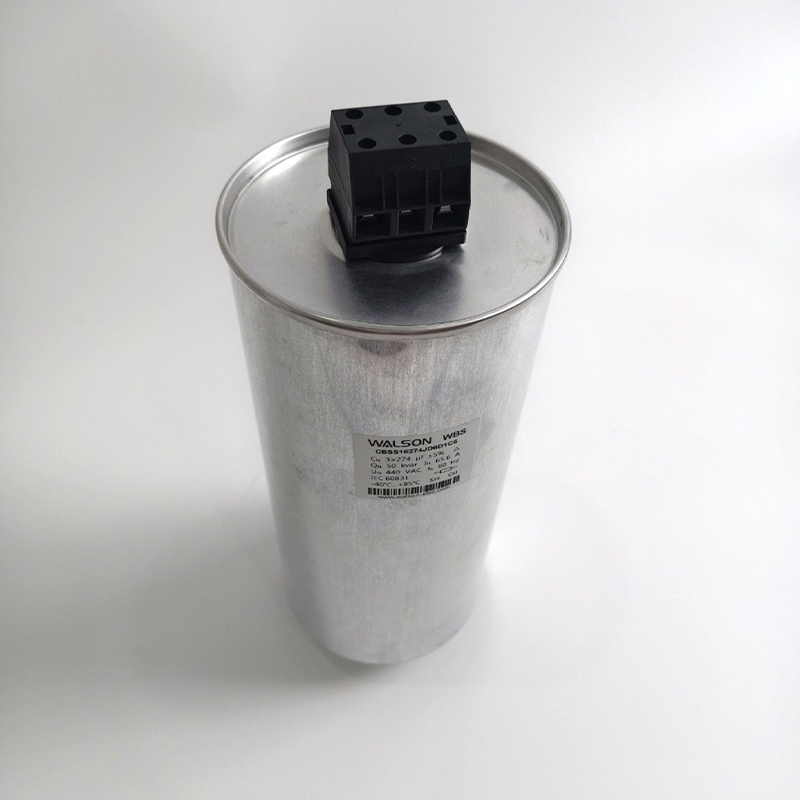
Replacing Electrolytic Capacitors with Film Capacitors: A Key Technological Breakthrough in Three-Level Inverters
Replacing Electrolytic Capacitors with Film Capacitors: A Key Technological Breakthrough in Three-Level Inverters
—Core component upgrade brings higher efficiency and reliability to power electronics
As renewable energy generation, rail transit, and industrial drives demand ever-higher power density and reliability, three-level inverters have become the mainstream topology for medium-to-high voltage, high-power applications. In the DC-link filtering section, a technological shift is accelerating—replacing traditional electrolytic capacitors with film capacitors.
For decades, electrolytic capacitors have dominated due to high capacitance density and low cost. However, their large equivalent series resistance (ESR), limited ripple current tolerance, and lifetime constrained by electrolyte evaporation (typically only a few thousand hours at 85°C) have made them the "weakest link" in inverter service life. In contrast, film capacitors offer ultra-low ESR, high ripple withstand capability, no polarity failure risk, and an extended lifetime exceeding 100,000 hours—dramatically improving long-term stability under harsh operating conditions.
Yet direct substitution is not a simple "drop-in" replacement. The key technical challenges center on three areas: capacitance optimization and ripple suppression—since film capacitors have only 1/5 to 1/10 the volumetric capacitance of electrolytics, capacitance matching strategies must be redesigned, and modulation algorithms must leverage three-level voltage-vector redundancy to reduce DC-link secondary ripple; high-frequency parasitic control—film capacitors' extremely low inductance requires simultaneous busbar structure optimization to avoid high-frequency oscillation with IGBT/SiC devices; and voltage balancing and dynamic response—three-level neutral-point potential control must be coupled with film capacitor charge/discharge characteristics to ensure bus voltage fluctuations stay within limits during transients.
Currently, leading domestic and international manufacturers have launched film-capacitor solutions in medium-voltage drives and PV inverters. Field data show total system volume can shrink by 20%–30%, service life extends beyond 15 years, and total lifecycle cost proves more competitive. Industry experts predict that, as metallized film materials mature and costs decline further, film capacitors are moving from "premium option" to "standard configuration," and are expected to cover over 80% of new three-level inverter designs within three years. This transformation not only pushes power electronics toward maintenance-free, high-reliability operation but also lays a solid hardware foundation for renewable-grid integration and smart-grid development.