简体中文
简体中文 English
 Español
Submit feedback
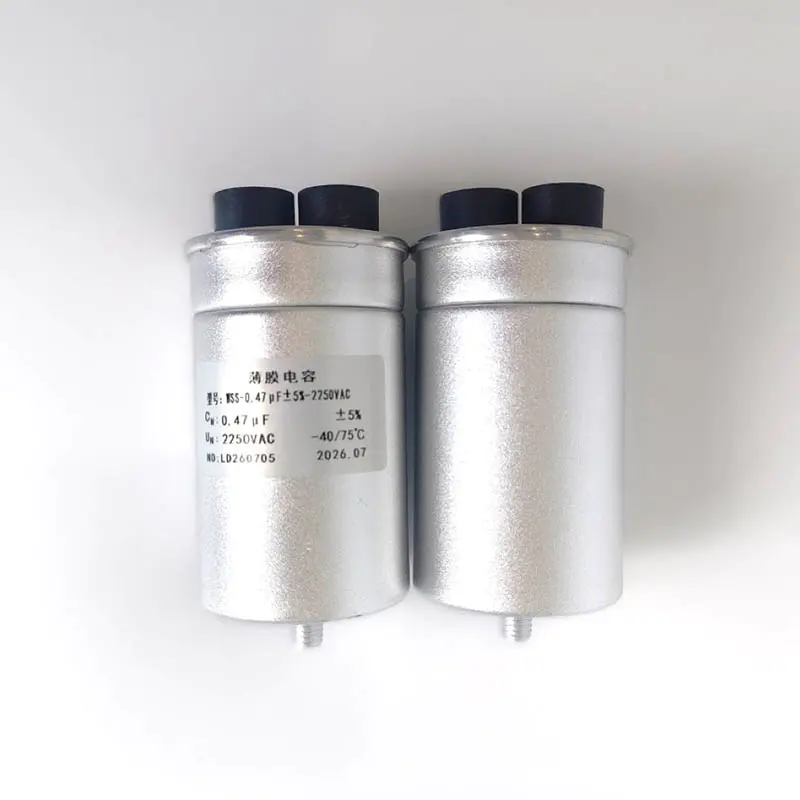
Why Can Film Capacitors Self-Heal? And What Factors Are Involved?
Why Can Film Capacitors Self-Heal? And What Factors Are Involved?
Film capacitors have garnered significant attention in fields such as new energy, flexible DC transmission, and consumer electronics, largely due to their unique "self-healing" property. This capability allows the capacitor to automatically restore insulation after a localized breakdown, preventing catastrophic short-circuit failures and greatly enhancing system reliability. So, how exactly does self-healing work, and what factors influence it?
Two Mechanisms of Self-Healing
Self-healing in film capacitors primarily occurs through two mechanisms: discharge self-healing and electrochemical self-healing. Discharge self-healing (also known as high-voltage self-healing) is the more common type. When a defect in the dielectric film or an overvoltage causes a breakdown, an instantaneous arc forms at the breakdown site, generating intense Joule heat. This heat rapidly melts and vaporizes the surrounding metalized electrode layer, creating an insulated, metal-free zone that restores insulation between the two electrodes. The entire process lasts only microseconds, allowing the capacitor to continue functioning. Electrochemical self-healing (low-voltage self-healing), on the other hand, occurs at lower voltages where ionic currents in humid environments cause oxidation of the anode metal, forming an insulating layer that covers the defect.
What Factors Affect Self-Healing Performance?
The self-healing behavior is influenced by multiple factors. Voltage is the direct factor—higher voltages to greater self-healing energy and larger electrode loss areas. Temperature has a non-linear effect: below 65°C, rising temperatures exacerbate self-healing damage, but above this threshold, the self-healing area actually decreases due to reduced adhesion between the electrode and dielectric caused by differential thermal expansion. Mechanical pressure helps suppress the extent of self-healing—increased pressure can reduce the self-healing area by as much as 99%. Additionally, the material and thickness of the metalized electrode directly determine whether self-healing can be successfully completed.
Understanding these influencing factors is of great significance for optimizing capacitor design and ensuring long-term stable system operation.